
His Excellency President Dr Irfaan Ali said Guyana’s designation as free of Foot and Mouth Disease without vaccination is “a strategic advantage for both Guyana and the wider Caribbean”. The President stressed that this enables the strengthening of national and regional food security, protects livestock industries, opens valuable export opportunities, and positions Guyana as a dependable supplier of meat and dairy products within CARICOM. “At a time when the region is seeking to reduce its dependence on imported food, Guyana’s disease free status enhances confidence in our agricultural systems, supports investment, and serves as an important line of biosecurity protection for neighbouring states. In this sense, it is a pillar of economic resilience and regional food sovereignty.”
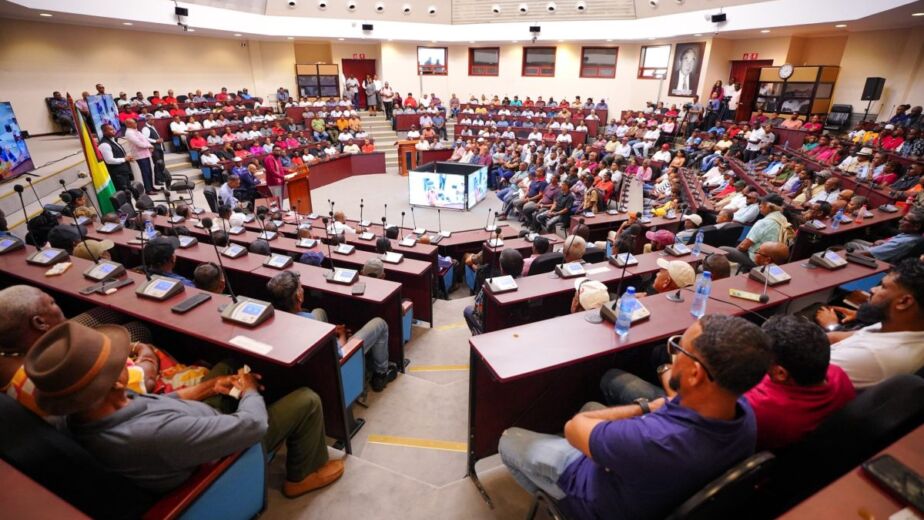
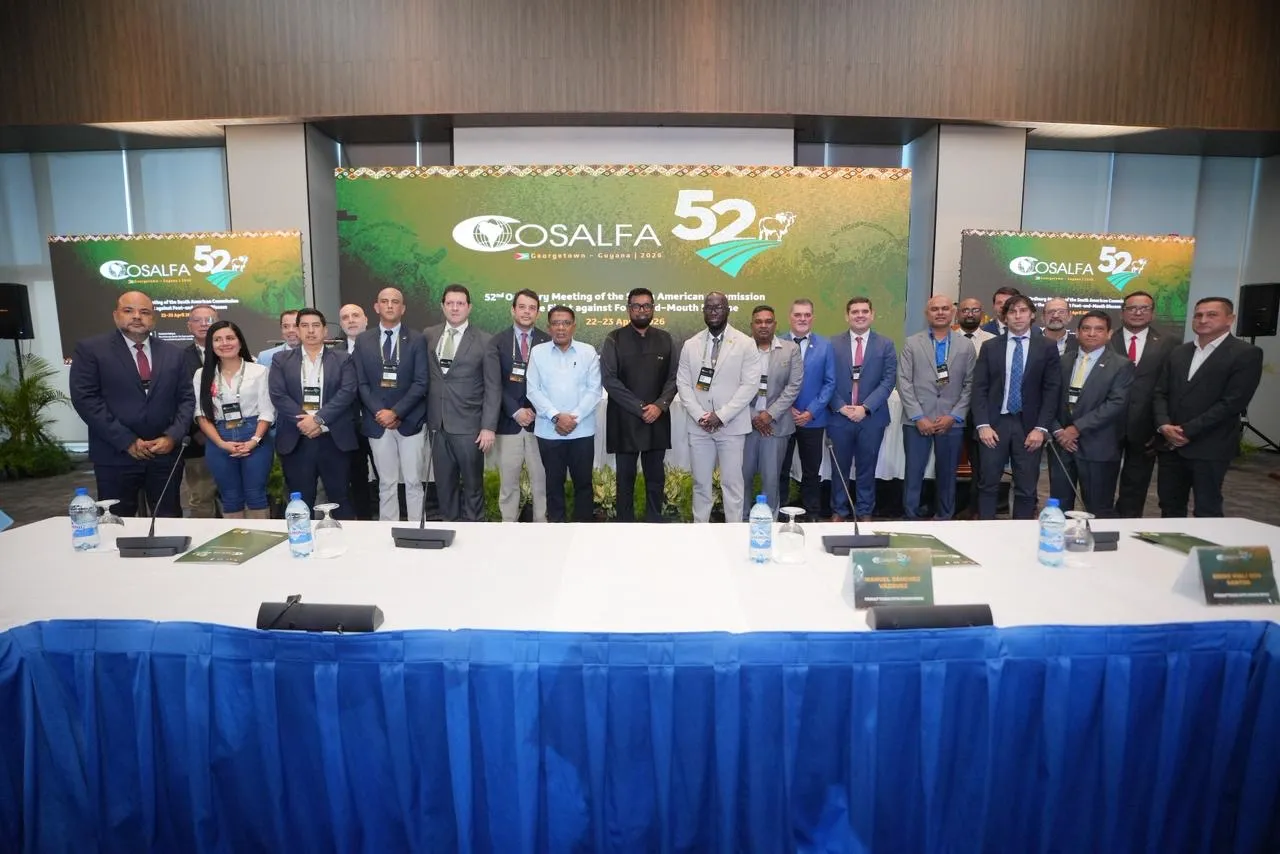
The Head of State, who addressed the 52nd Ordinary Meeting of the South American Commission for the Fight of Foot and Mouth Disease (COSALFA) at the Pegasus Hotel and Corporate Centre today, however warned that the country and the region as a whole should always protect itself against possible attacks. He noted that vigilance alone is insufficient and it needs to be paired with interconnected systems powered by AI, digitisation, and traceability to secure food sovereignty and resilience against global shocks.
The President reminded of CARICOM’s 2030 targets to reduce food imports by 4.6 million tonnes. He said that this was backed by over US$640 million in livestock investment, and highlighted Guyana’s own advances in breeding programmes, feed production, diagnostics, and vaccine manufacturing. Region Five, he explained, is being transformed into the livestock capital of CARICOM, while new investments in genetics, abattoirs, and feed production are reshaping Guyana’s agricultural base. “These are not incremental changes; they are transformative investments in our national and regional food future.”
President Ali also pointed to wider geopolitical pressures, noting that “international shipping networks are facing disruption; fertiliser supplies are being constrained, grain shipments are delayed, and livestock trade logistics have become increasingly uncertain”. Against this backdrop, he pressed for harmonised standards, trusted markets, and regional coordination to secure food sovereignty and resilience against global shocks.
Guyana’s achievement, he emphasised, must serve as a model for collective regional strength. “It enables us to expand intra regional trade in livestock and livestock products with significantly reduced sanitary barriers. It allows us to build a CARICOM animal health corridor based on mutual trust, transparency, and harmonised standards.”
The President also underscored the region’s food security drive: “Let this gathering in Guyana therefore send a clear and powerful message that our region is united, that our systems are strengthening, and that our commitment to safe, sustainable, and sovereign food production is unwavering.”